A parent signs up. A coach runs the six weeks. The young person plays. Every screen below is the real thing.
The sign-up, the kit, three short notes a week, one two-minute check-in. Your teen's answers in the game stay theirs.
parentgriefgalaxy.com
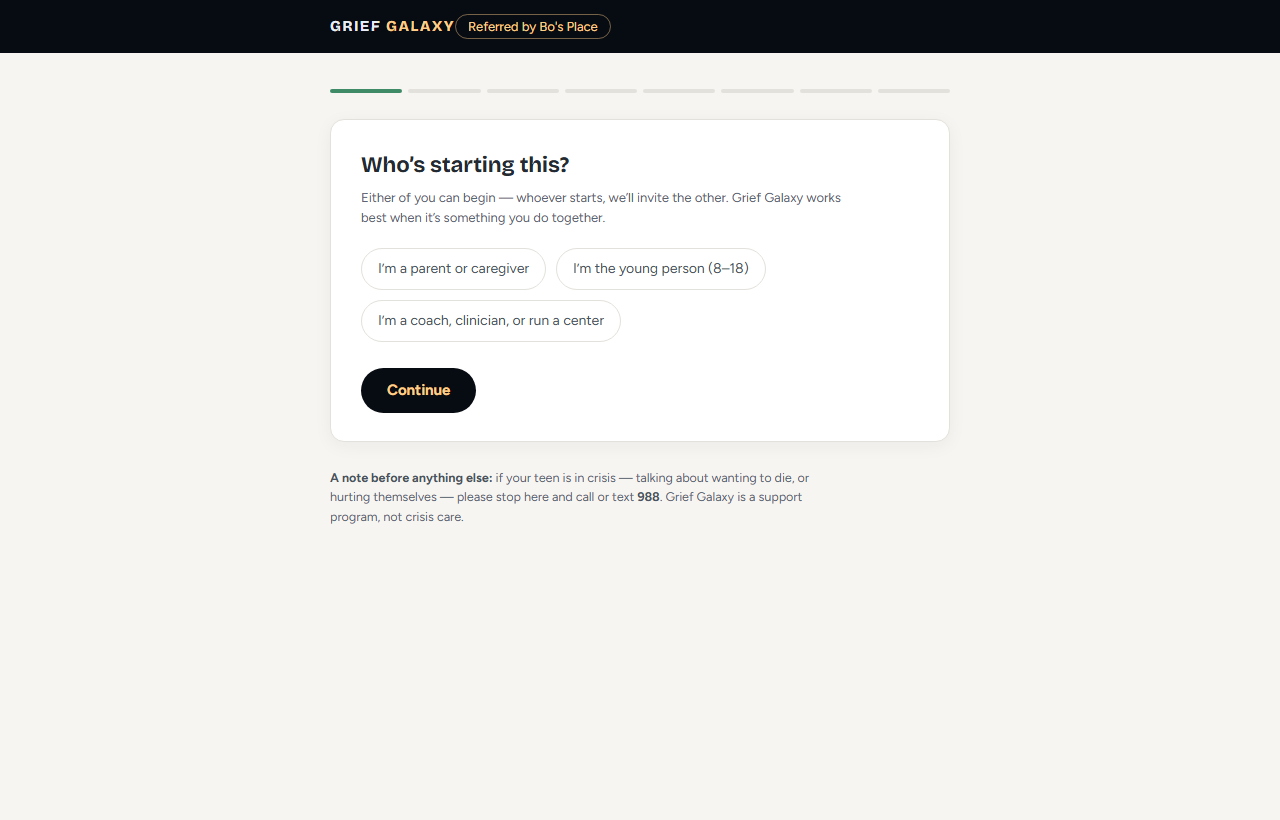
Who you are, who your teen is, who died and how, where the kit goes, when to start, how to reach you, and consent. If a grief center or hospice sent you, their link puts your family on their board automatically.
parentemail · post
A welcome email arrives at once with your family code. Your coach sees the sign-up the same minute and ships the kit: the fridge calendar, crew stickers, the sealed conversation cards, the plain-language guide.
young persona link by email or text
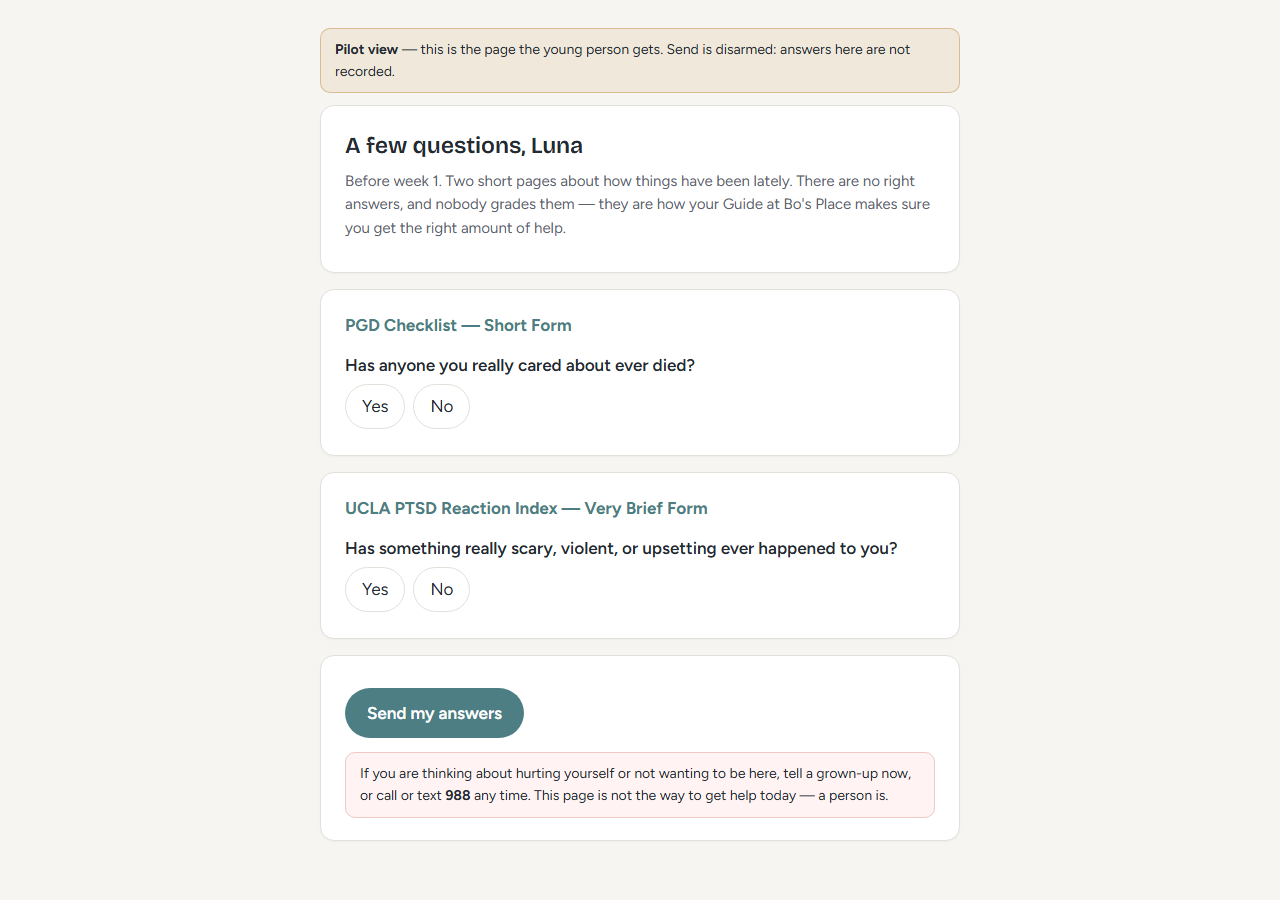
Before the first world opens, your teen answers two short pages about how things have been. There are no right answers. They decide how much of a person your family gets alongside the game: most families run on the standard rhythm; a family whose answers are above a line gets a call in week one and a warm hand-off to a clinician.
parentemail · text
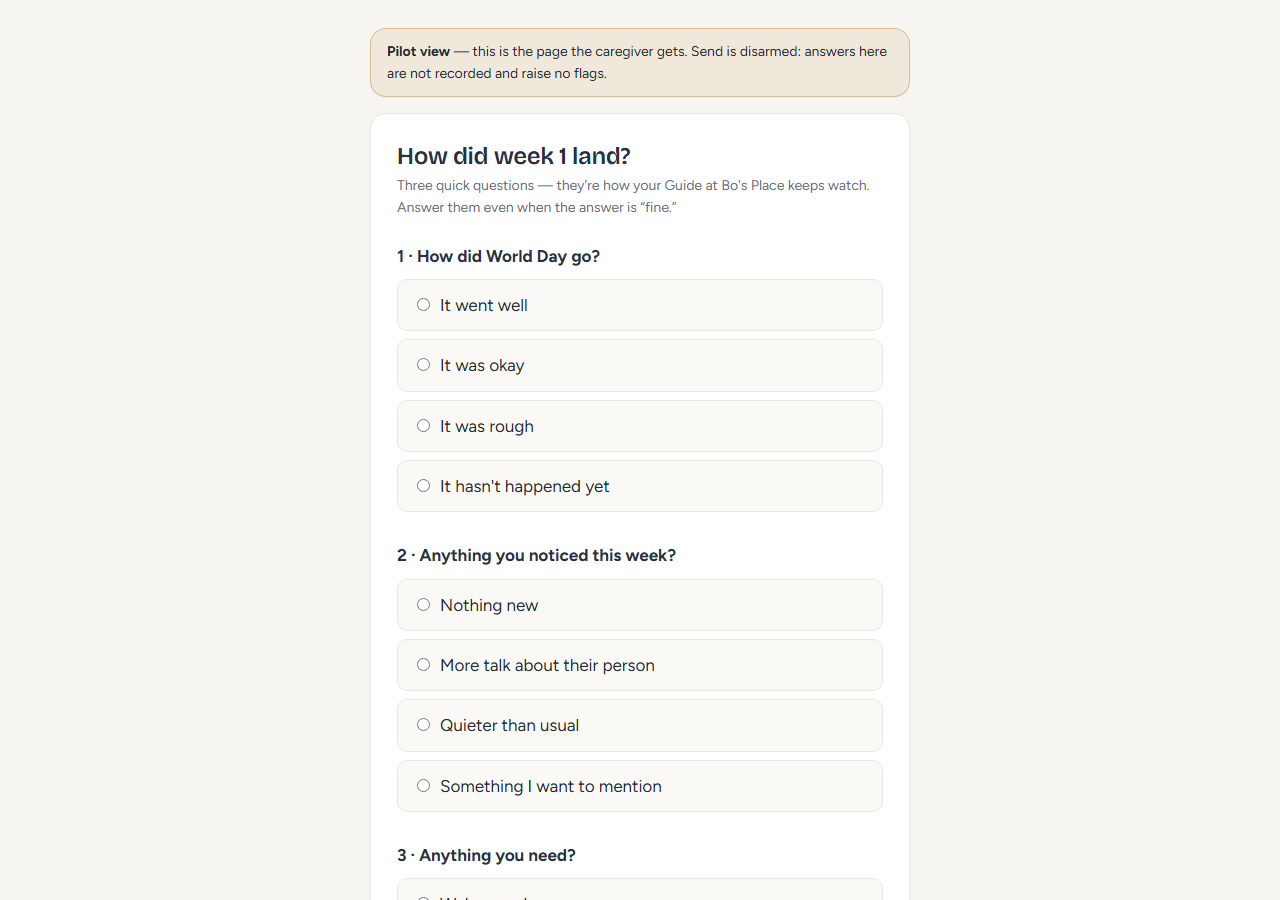
Day 0: the world opens and you get that week's page, with three things you might say. Day 3: a nudge, only if nobody has played. Day 7: three tappable questions. World Day itself is thirty to fifty minutes, side by side, the teen driving. Worlds never stack; a missed week waits.
everyone
After world six the ship flies and the home world stays open forever. Your teen answers the two pages again at the end and three months on. If the answers have not moved, a person steps in: that is the program working, not failing.
A facilitator, a bereavement coordinator, a school counselor. Not the clinician — every clinical call has a named backstop.
coachgriefgalaxy.com
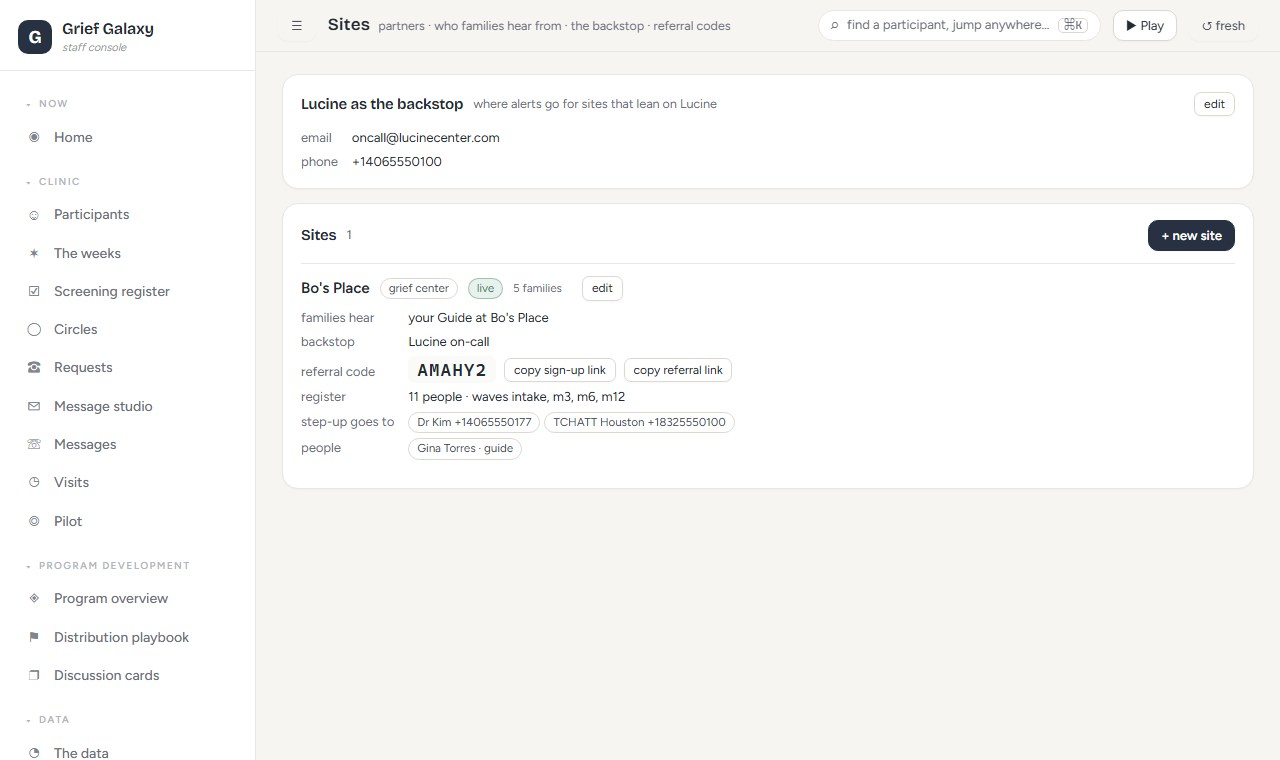
Your organisation, who you are, how many families a year, whether a licensed clinician is on staff. We call, agree the backstop, and create the site with its referral code.

coachthe console
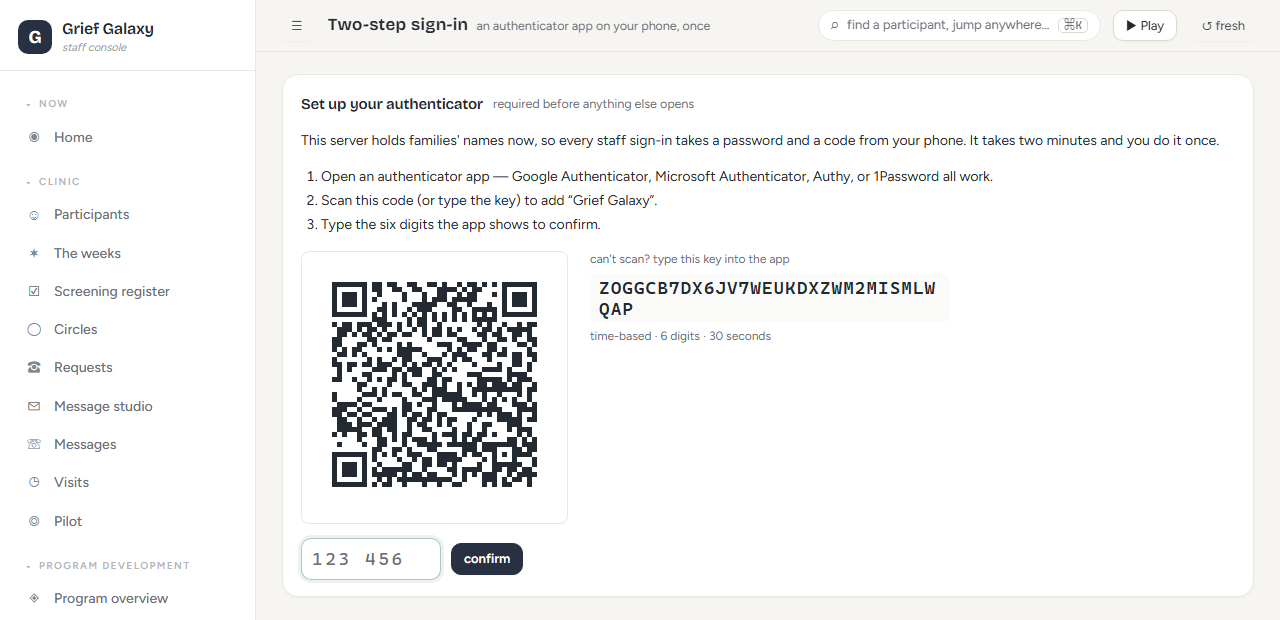
A named account, scoped to your site. Two-step sign-in with an authenticator app is set up the first time you sign in and cannot be skipped. You see your families' names, totals and flags. You never see a young person's own words in the game.

coachthe console
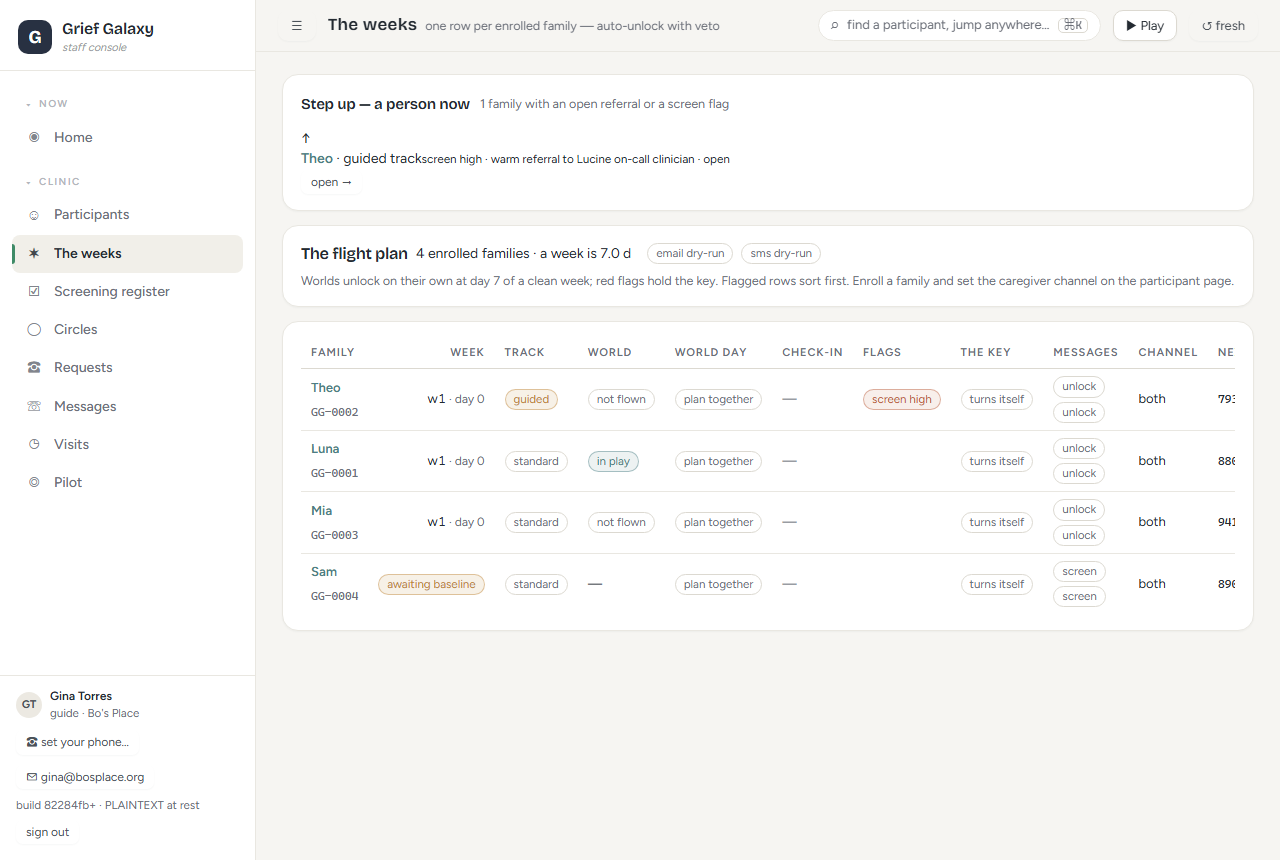
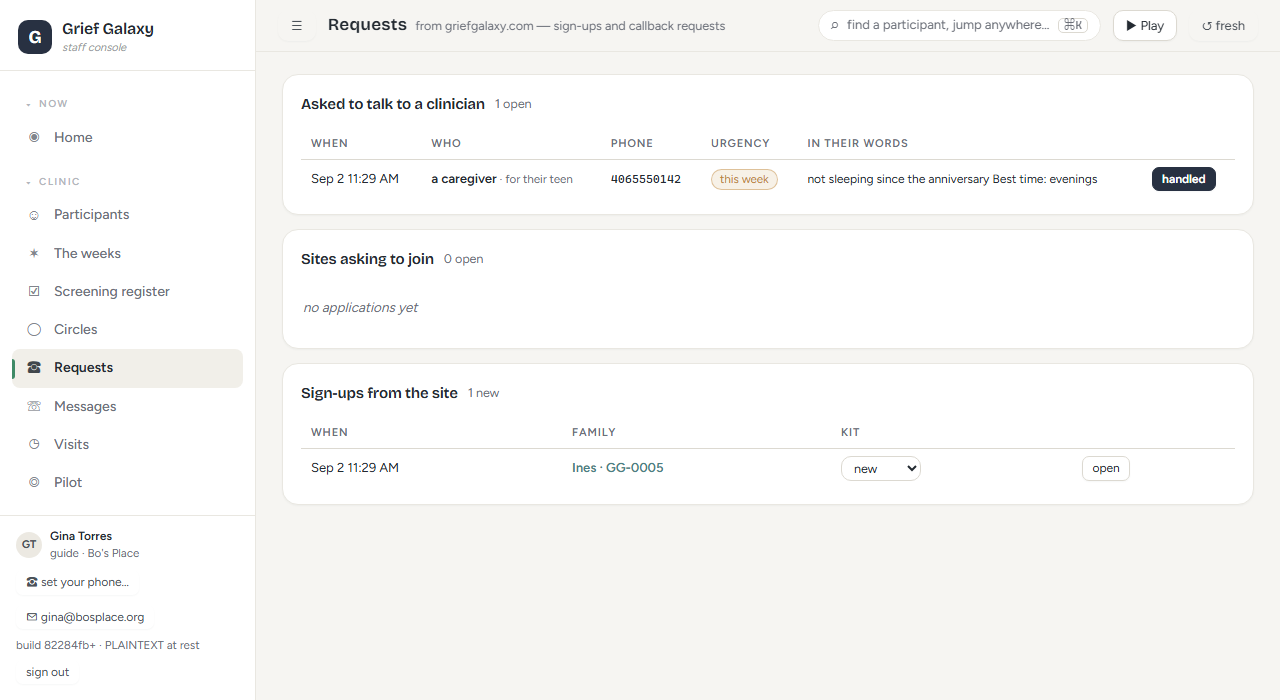
One row per family: the week, whether World Day happened, the check-in, the flags, whether the key is held. Flags sort first. The step-up worklist sits above it. A Monday digest lands in your inbox; flags reach you the same day by email or text.

coachthe console
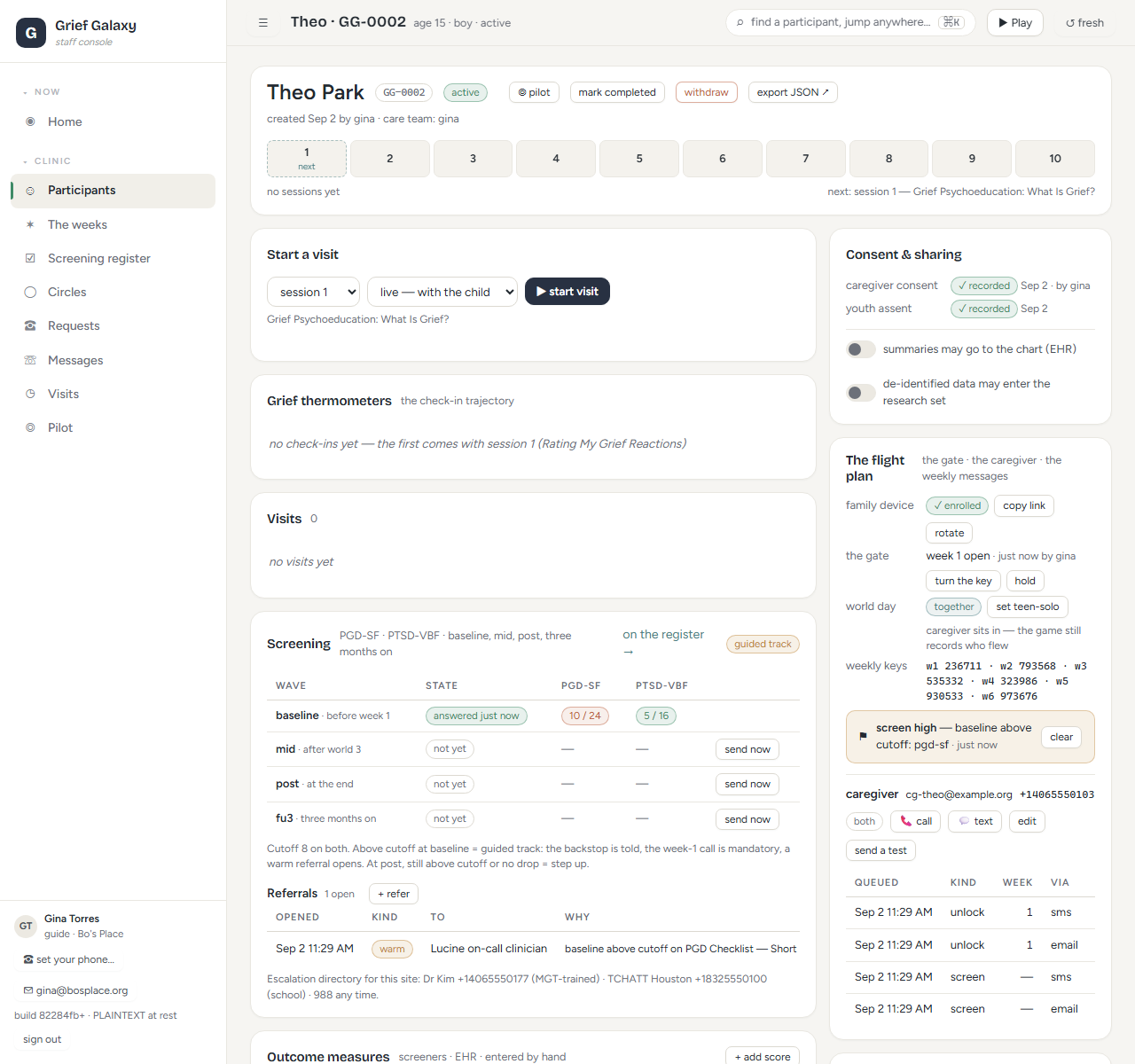
The screening card: the four waves, totals against the cutoff, the track, referrals with their status. The flight plan: the device, the key, the caregiver's channel. Send a link again, refer to a person, hold the key.

coachthe console
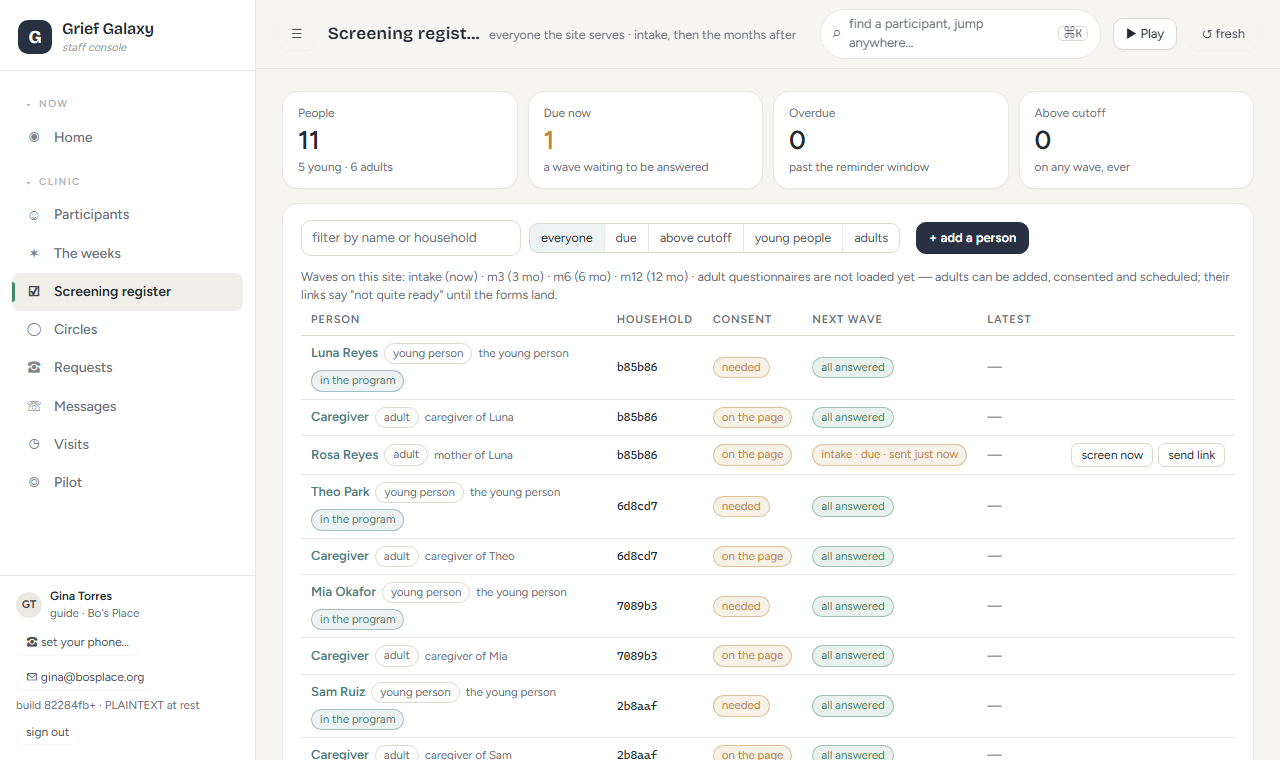
Screen every young person and adult at your site with the same short forms, whether or not they play: intake, then three, six and twelve months on. Hand a tablet across the desk, send a link, or enter paper. Enrol a young person in the program from here and their intake becomes the baseline.

coachthe facilitator screen
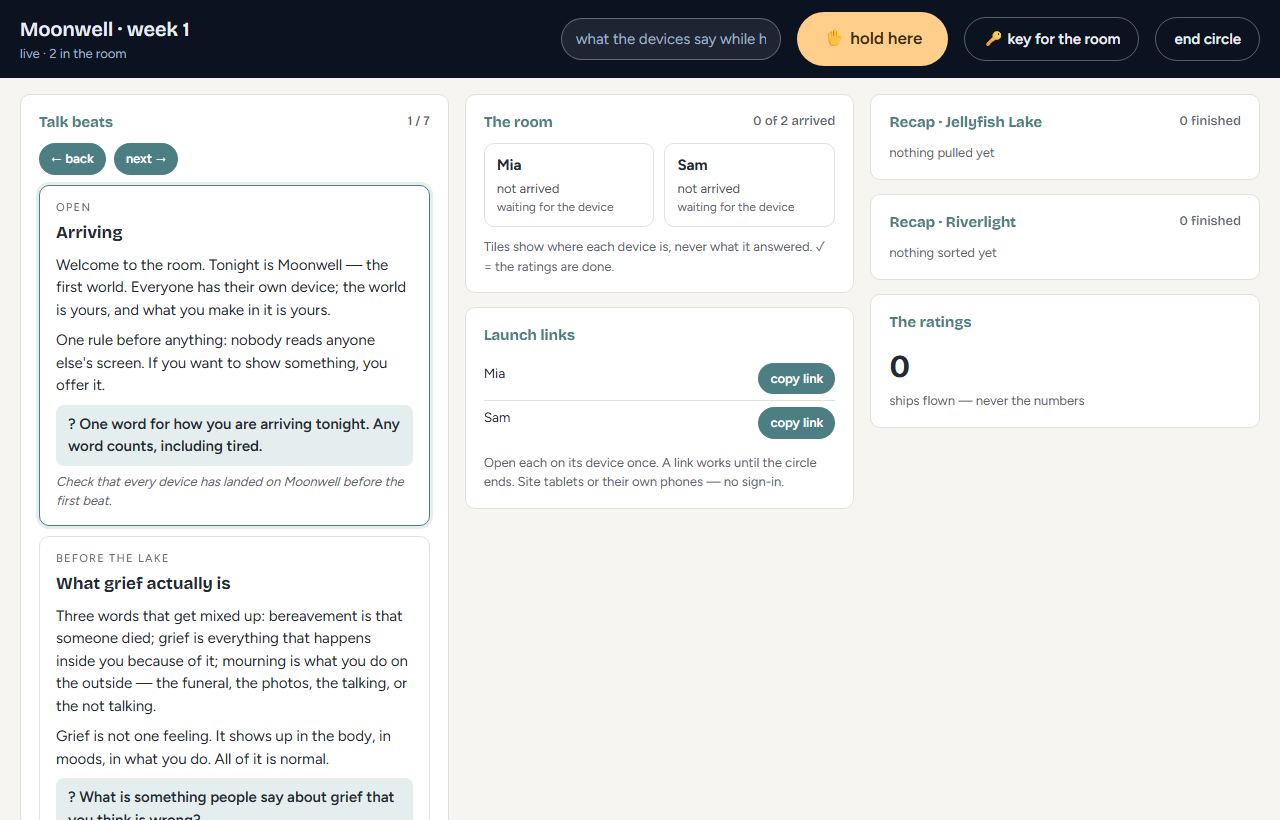
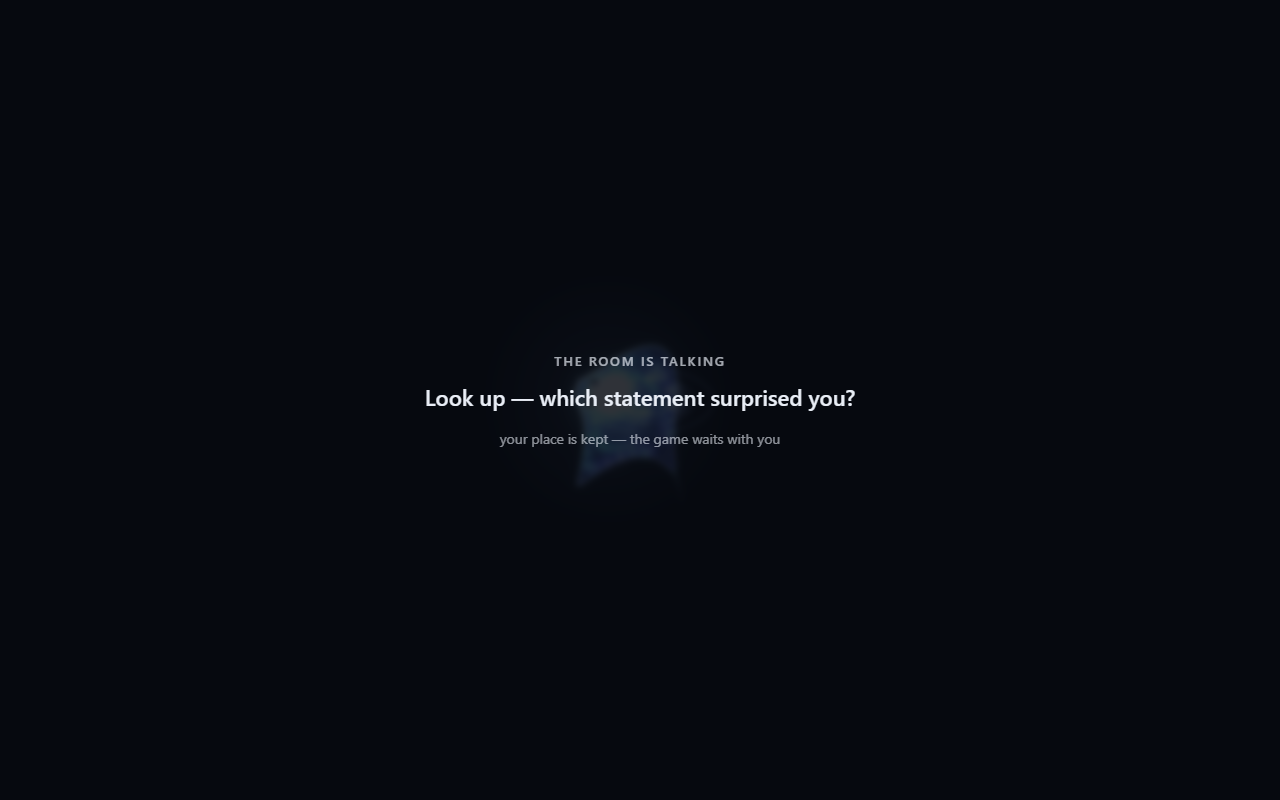
Pick a world and who is in the room. Each young person gets a link for their own device. Your screen shows the talk beats, who is where, and count-only recaps. Hold the room, and every device shows "the room is talking". One key opens the week for everyone.

They never sign up. A grown-up sets up their device once; from then on the world is theirs.
young personthe game
The first time, a short painted film: a moth, an otter, a few words, and the ship gets its name. Nothing to read that is not read to them; nothing the device reads aloud that a person should.

young personthe game
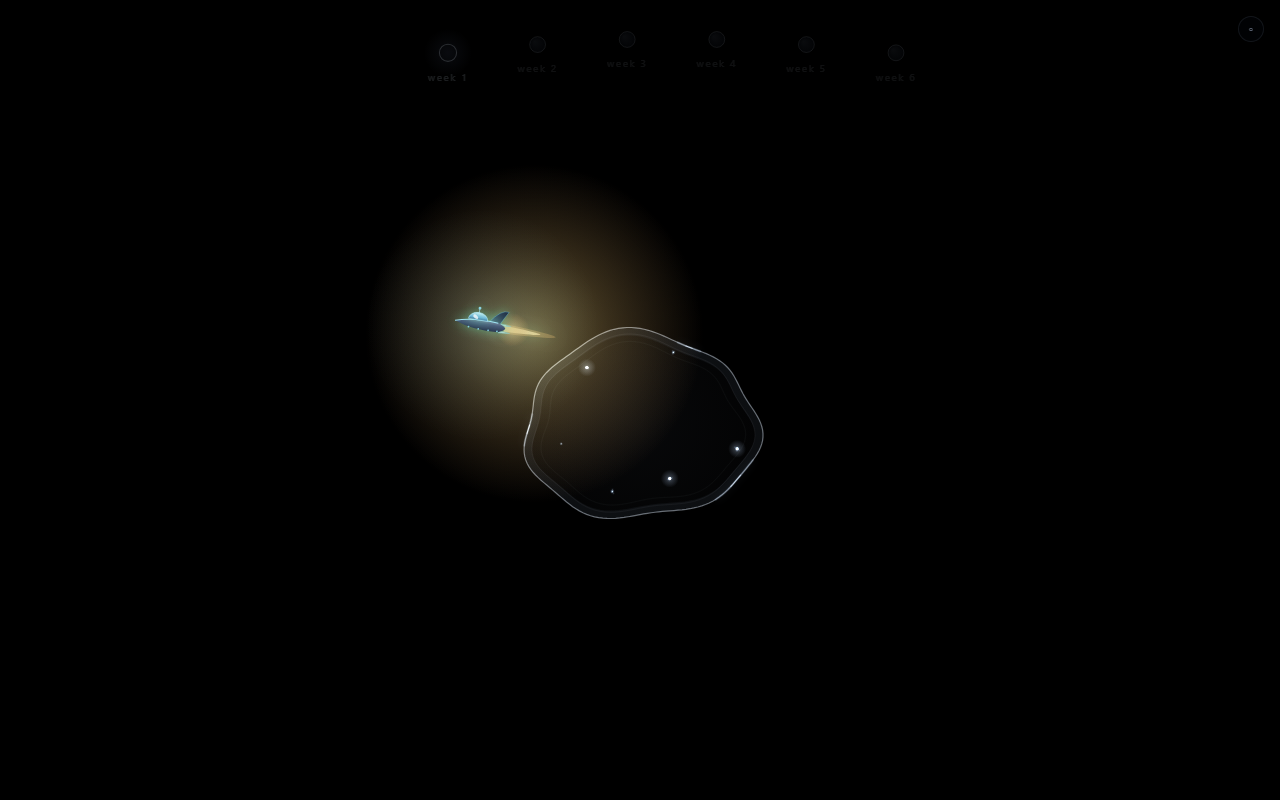
A black sky, their ship, and the arc of six worlds. The first is lit; the rest wait. Companions come to live here as worlds are finished. The things they make are kept in the ship's hold.

young personthe game
What grief actually is. Jellyfish Lake, where nine statements about grief float up as true or false and getting one wrong is the point. Riverlight, where six companions carry the three kinds of grief and every thought finds its water.

young personthe game
Ten thermometers about how grief has been. Never coached, never watched: in a co-played session the grown-up looks away; in a circle the facilitators turn around. The numbers go to the people looking after them and to nobody else.

young persontheir device
When a world is played in a circle, the same game runs on each device. When the facilitator holds the room, every screen says so and keeps its place.